
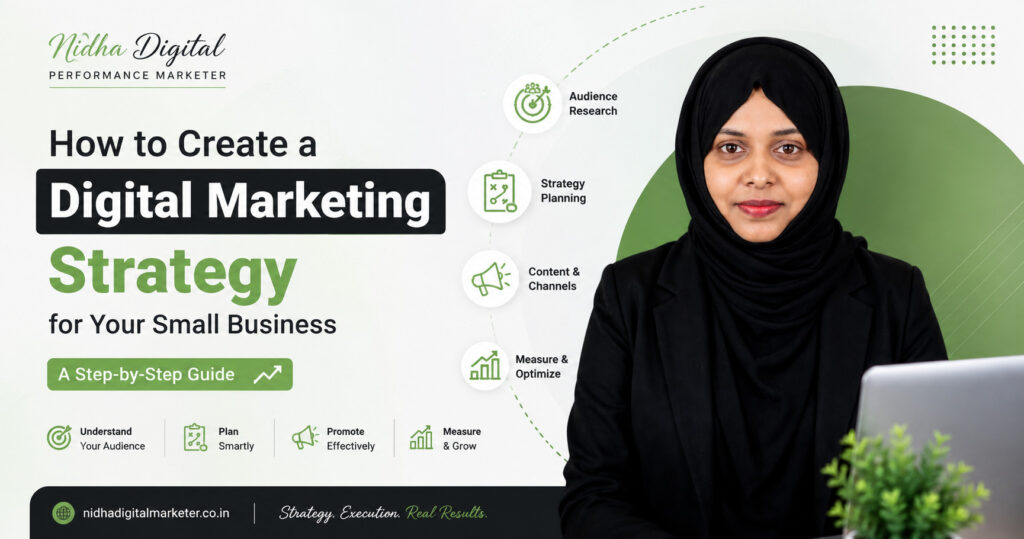
A good digital marketing strategy doesn’t mean being active on every platform. For a small business, the smarter approach is to understand your customers, set a clear goal, choose the right marketing channels, and measure what actually brings results. A simple and focused plan is often more useful than trying to do everything at once.
Start With a Clear Goal
First, decide what you want your marketing to achieve.
For example:
- More inquiries
- More sales
- Better brand awareness
- More website visitors
- More repeat customers
Your goal should guide the rest of your marketing decisions.
Know Who You Want to Reach
Effective marketing starts with knowing your customer.
Think about:
- Who is most likely to buy from you?
- What problem are they trying to solve?
- What questions do they have before buying?
- Where do they search for information?
When you understand these points, it becomes easier to create relevant content and choose the right advertising channels.
Make Your Offer Easy to Understand
A potential customer should quickly understand what you offer and why it matters to them.
Keep your message simple:
What do you offer? → Who is it for? → What problem does it solve? → What should the customer do next?
For example, instead of simply promoting a service, clearly explain how that service can help the customer achieve a specific outcome.
Choose Channels Based on Your Audience
You don’t need to use every digital marketing platform.
| Channel | When It Can Be Useful |
| SEO | When you want long-term visibility through search |
| Google Ads | When customers actively search for your product or service |
| Meta Ads | When you need to reach and introduce your business to new audiences |
| Social Media | When your audience regularly engages with relevant content |
| when you want to stay connected with leads and customers. |
Start with the channels that make the most sense for your business.
Think About the Customer Journey
Marketing is not just about getting attention.
Think about the path a customer takes:
Discover → Learn → Consider → Take Action → Return
For example, someone may first discover your business through social media, visit your website later, and finally contact you after searching for more information.
A clear strategy considers the entire journey, not just the first click.
Make Your Website Ready for Visitors
Your marketing efforts can bring people to your website, but the website must help them take the next step.
Check whether your website has:
* A clear message
* Easy navigation
* Relevant information
* A visible call to action
* A simple way to contact or inquire
More traffic alone does not guarantee growth. The visitor must understand what to do next.
Track What Is Working
Don’t rely only on likes, followers, or clicks.
Depending on your goal, track:
* Leads
* Sales
* Conversion rate
* Cost per lead
* Customer acquisition cost
* Revenue
This helps you make decisions based on performance rather than guesswork.
A Simple Digital Marketing Framework
As a performance marketer, I prefer to look at marketing as a connected process:
Goal → Audience → Offer → Customer Journey → Channel → Content/Campaign → Landing Page → Tracking → Improvement
This keeps the strategy focused and makes it easier to identify what needs to be improved.
Frequently Asked Questions
What is a digital marketing strategy?
It is a plan for using digital channels to reach the right audience and achieve specific business goals.
Which digital marketing channel should a small business use?
Choose the channel based on your audience and goal. A local service business may benefit from search visibility, while a visual product may benefit from social media advertising.
Should a small business use both SEO and paid advertising?
It depends on the business. SEO can support long-term visibility, while paid campaigns can help you reach potential customers more quickly.
How do I know if my marketing is working?
Look beyond traffic and engagement. Measure whether your marketing is generating useful actions such as inquiries, leads, sales, or revenue.
Final Thoughts
A successful digital marketing strategy for a small business should be simple enough to manage and clear enough to measure. Start with a goal, understand your audience, communicate a strong offer, choose relevant channels, and track the results.
You don’t need to be everywhere online. You need to be present where your potential customers are most likely to find and choose your business.